Capability, not provider
Applications describe what they need.
 Distributed Inference
In development · Seeking pilot organisations
Policy-controlled AI infrastructure for sensitive organisations
Use powerful AI while keeping control over where your information goes.
Distributed Inference places a policy-controlled boundary between your applications, private knowledge and AI. Applications request a capability. Policy determines where it may run and what information may leave your environment.
The file stays. Only what must leaves.
capability → legal.reasoningplacement → policy selectedDI / PRINCIPLE / 01
Direct AI integrations can distribute provider credentials and leave individual applications responsible for deciding where organisational information is sent. Distributed Inference creates one controlled boundary for AI.
Applications describe what they need.
Organisational rules determine where inference may happen.
Only context permitted by policy crosses the boundary.
DI / FLOW / 02
Applications stay focused on the capability they need. Distributed Inference applies the organisation's rules around placement and disclosure.
Noah or another application asks for an AI capability without selecting an external provider or holding its credentials.
CAPABILITY legal.reasoningDistributed Inference determines whether the request may run locally or externally, where it may be placed, and what information may accompany it.
CLASS LEGAL.MATTERREGION UKDECISION ALLOWPrivate source material stays local. Only the context required and permitted for the task is eligible to cross the boundary.
The same application can use different inference locations as organisational policy requires.
The response returns through Distributed Inference to the requesting application.
Policy decisions and permitted disclosures are recorded so organisations can understand how AI was used.
DI / ARCHITECTURE / 03
A simple capability contract gives applications governed access to AI while organisational policy controls where work may run and what information may accompany it.
01Applications ask for capabilities, not providers.
02Provider credentials remain behind the Distributed Inference boundary.
DI / MODEL SUPPORT
Distributed Inference supports OpenAI, Anthropic and Google models, alongside most open-weight models running locally. Organisational policy determines which approved model can handle each request and what information it may receive.
HOSTED MODELS
Use models from these providers through the same controlled boundary, with provider credentials kept behind Distributed Inference.
Examples from provider model ranges. Availability depends on the configured provider account, deployment and organisational policy.
LOCAL MODELS
Run most open-weight models on your own infrastructure, keeping inference within your organisation's approved environment.
Model choice depends on available hardware, runtime compatibility and licence terms.
DI / HARDWARE & DEPLOYMENT
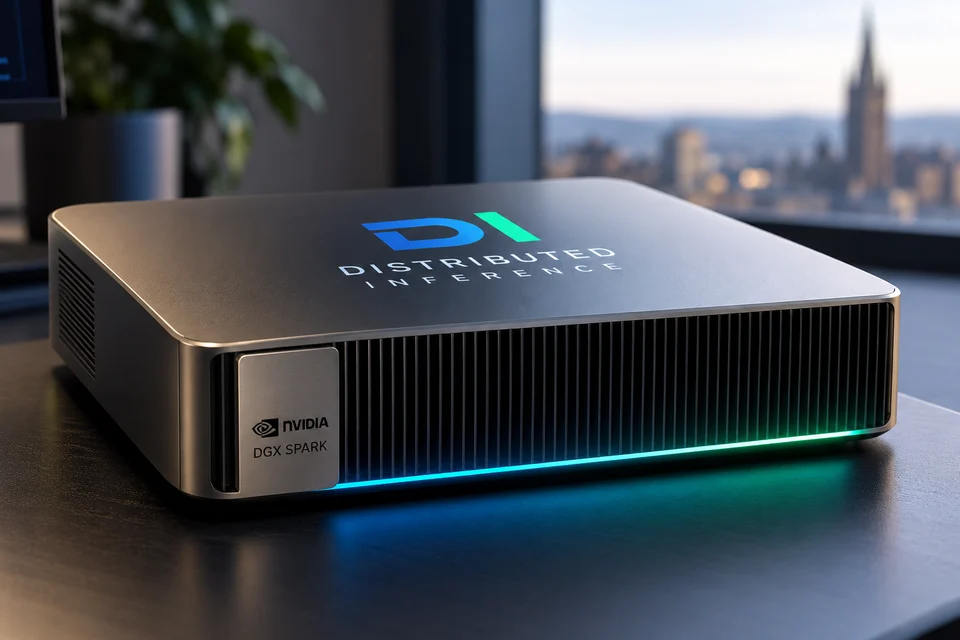
Distributed Inference runs across a range of hardware, including existing servers, Mac and Linux systems, with support for x86 and ARM architectures. Choose infrastructure that fits your organisation, your workloads and your information boundaries.
ILLUSTRATIVE / LEGAL / 04
“Have we handled a matter similar to this before?”
Distributed Inference can search private organisational knowledge locally and use approved AI reasoning without uploading the firm's document repository. Organisational policy controls what context may leave and where it may be processed.
Illustrative product direction. Grounded answers and citations are planned capabilities, not a statement of current production availability.
SCOTLAND / LEGAL PILOT PROGRAMME
We're working with several Scottish law firms on a pilot programme for Distributed Inference.
The programme focuses on how legal teams could use advanced AI with private organisational knowledge while retaining control over sensitive information. Each pilot will define its scope, permitted uses and success criteria with the participating firm.
Discuss a legal pilotDI / APPLICATIONS / 05
Our current pilot focuses on legal and advisory work. We're also keen to hear from other industries where information must remain within approved environments, regions or supply chains.
CURRENT PILOT FOCUS
Search matters, engagements, contracts and correspondence while keeping client knowledge under organisational control.
Our current pilot programme is focused on legal teams, working with Scottish law firms to shape practical use and firm-defined controls.
Discuss a legal pilotEXPLORE OTHER INDUSTRIES
Working in another sector? We'd like to understand your requirements.
Explore advanced AI while enforcing policies around clinical, patient, trial and research information.
Give teams governed access to AI across customer, transactional, risk and policy information.
Apply organisational handling rules when exploring AI over sensitive operational and government information.
Keep operational and infrastructure knowledge within approved boundaries while enabling controlled AI assistance.
Work with designs, technical knowledge and commercially sensitive research without treating external disclosure as the default.
1 / 5 · Healthcare & life sciences
Click a card or use the arrows to explore.
Illustrative workflows for evaluation. Requirements, deployment constraints and permitted uses are assessed with each organisation.
DI / FIRST-PARTY / 06
Noah brings chat, search, skills, agents and workflows to private organisational knowledge, while Distributed Inference provides controlled AI capability.
Have we handled a matter similar to this before?
Three potentially relevant matters were found in the permitted knowledge set.
Which local guidance is relevant to this referral?
Relevant guidance and two local pathway documents were found in the permitted knowledge set.
Concept only · For professional review · Not diagnostic advice
DI / MICROSOFT OFFICE ADD-INS
Our Microsoft Office Add-ins bring Distributed Inference into Outlook, Word and Excel, so teams can work with AI without leaving familiar applications.
Draft emails and prepare replies in your inbox, with AI assistance governed by your organisation's rules.
EMAILS & CORRESPONDENCEPrepare letters, draft documents and refine wording while working directly in Word.
LETTERS & DOCUMENTSGet AI assistance with spreadsheets inside Excel, through the same controlled access to models.
SPREADSHEETS & WORKBOOKSFAMILIAR TOOLS. CONSISTENT CONTROLS.
Your organisation's rules determine which models may be used, where inference can run and what information may be shared. Those controls follow the request, whether it comes from an Office Add-in, Noah or an application using the API.
Explore the add-ins with usDI / API / 07
Noah is a first-party client. Third-party applications and enterprise systems can use the same capability contract—without needing to know which provider ultimately executes the request.
DI / THESIS / 08
AI capability is advancing rapidly, but organisations should not have to choose between using powerful models and maintaining control over sensitive information.
We believe applications should describe the intelligence they need while organisational policy determines where that computation is allowed to happen.
That's the idea behind Distributed Inference.
DI / TEAM / 09
Distributed Inference is being developed in Glasgow by a technical team focused on a difficult enterprise question: how can organisations use modern AI without surrendering control of sensitive information?
The work sits at the intersection of distributed systems, enterprise integration, AI infrastructure and information security. We approach it as critical infrastructure—not as another layer of AI theatre.

Clear interfaces, operational discipline and integration with the systems organisations already rely on.
Policy, minimum necessary disclosure, credential isolation and auditability are treated as core requirements.
We're working with practitioners to challenge assumptions and shape useful pilot outcomes. We welcome more technical, security and privacy leaders to help guide the next stage.
WHAT A PILOT ORGANISATION CAN EXPECT
DI / PILOT / 10
We're looking for organisations that handle sensitive or regulated information and want to evaluate Distributed Inference through a controlled pilot.
We're particularly interested in speaking with technology, security, privacy and AI leaders across professional services, healthcare, life sciences, financial services, defence, the public sector, energy and research-intensive organisations.